
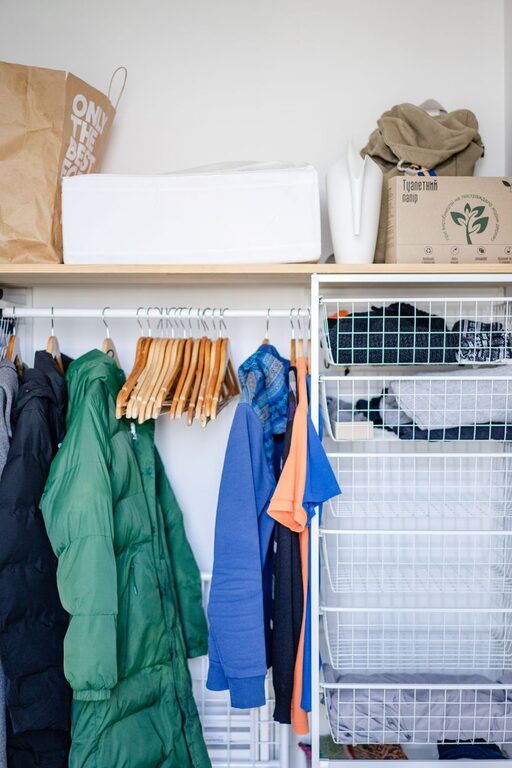
Changing your wardrobe with the seasons can make daily dressing easier, but storing out-of-season clothes can quickly become a challenge. Bulky coats, knitwear, summer clothing, and special-occasion items all need a suitable place between wears.
With a simple system, you can protect your clothes, save space, and make seasonal changes much less stressful. The key is to clean items before storing them, choose the right containers, and keep everything easy to find.
Start with a wardrobe review
Before packing anything away, take a few minutes to review each item. Seasonal storage is a useful opportunity to reduce clutter and identify clothes that need repair, replacing, donating, or recycling.
Create four groups:
– Keep and store
– Keep in your current wardrobe
– Repair or clean
– Donate or recycle
Be realistic when deciding what to keep. If you did not wear an item during the season, consider whether you are likely to wear it next year. Clothes that no longer fit, feel uncomfortable, or no longer suit your style may be better passed on.
Avoid storing items simply because they were expensive or once had sentimental value. If something is special, consider keeping one meaningful piece rather than an entire collection.
Clean clothes before storage
Always clean clothes before storing them, even if they appear fresh. Small amounts of body oil, food, perfume, or sweat can attract pests and leave permanent odours or stains over time.
Check the care label and wash or dry-clean each item as recommended. Make sure everything is completely dry before packing it away. Even slight dampness can lead to mildew, especially in tightly closed containers.
Pay particular attention to:
– Coats and jackets
– Wool and cashmere
– White or light-coloured clothing
– Activewear
– Swimsuits
– Shoes and boots
– Clothing with pockets or embellishments
Empty every pocket and remove accessories such as belts, scarves, and removable pins. Clean shoes before storage, allowing them to dry fully before placing them in a container.
Choose the right storage containers
The best container depends on the type of clothing and the storage area. Avoid using cardboard boxes for long-term storage in places that may become damp, such as basements or garages. Cardboard can absorb moisture and provide a hiding place for pests.
Useful options include:
Fabric storage bags
Breathable fabric bags work well for many everyday clothes, including cotton tops, trousers, and lightweight knitwear. They allow some air circulation and can be placed on shelves or under a bed.
Choose bags with sturdy zips and clear panels or labels. Avoid overfilling them, as tightly packed clothing can crease and lose its shape.
Plastic storage bins
Plastic bins provide protection from dust and moisture. They are especially useful for items stored in wardrobes, closets, or under beds.
Use clean, dry bins with secure lids. Transparent containers make it easier to identify the contents, but opaque bins can also work well when clearly labelled. Choose medium-sized bins rather than very large ones, which can become heavy and difficult to move.
Vacuum storage bags
Vacuum bags can reduce the space taken up by bulky items such as puffer coats, ski clothing, and duvets. However, they are not suitable for every fabric. Long-term compression may damage delicate knitwear, leather, structured garments, or items with natural filling.
Use vacuum bags for suitable bulky pieces and follow the manufacturer’s instructions. Check the items periodically if they will remain compressed for several months.
Fold clothes properly
Folding clothes neatly helps prevent deep creases and makes it easier to find what you need later. Fold heavier items at the bottom of a container and lighter pieces on top.
For knitwear, fold rather than hang it. Hangers can stretch the shoulders and change the shape of wool, cashmere, and other flexible fabrics. Place tissue paper between delicate layers if you want additional protection.
For trousers, fold them along the natural crease. T-shirts and casual tops can be folded into compact rectangles. Avoid rolling clothing tightly for long-term storage, as this can create stubborn creases.
Do not pack containers so tightly that clothes are difficult to remove. A little extra space helps prevent crushing and allows you to add or remove pieces without disturbing everything else.
Store coats and special garments carefully
Some garments are better hung than folded. Structured jackets, formal dresses, suits, and tailored coats can lose their shape when packed tightly.
Use broad, well-made hangers that support the shoulders. Cover garments with breathable fabric covers rather than plastic dry-cleaning bags, which can trap moisture and cause odours over time.
Leave enough space between hanging clothes for air to circulate. Avoid placing heavy items on top of delicate garments, and keep clothing away from direct sunlight, which can cause fading.
For wedding clothing, costumes, or other valuable personal items, consider a protective archival-quality garment box. Include a label with the contents and storage date so the item can be handled appropriately later.
Protect shoes and accessories
Shoes can take up considerable space, so clean and prepare them before storage. Remove dirt, allow shoes to dry, and apply suitable care products according to the material.
Keep shoes in pairs and use their original boxes when practical. Alternatively, place them in breathable shoe bags or clear containers. Stuff boots with acid-free tissue paper or boot supports to help them retain their shape. Avoid newspaper, as ink may transfer to some materials.
Store handbags with tissue paper inside to maintain their shape. Keep belts loosely rolled, and place scarves and small accessories in labelled pouches or drawer organisers.
Choose a suitable storage location
The storage environment is just as important as the container. Choose a cool, dry, and dark place with stable temperatures. A closet shelf, wardrobe, or under-bed storage area is often suitable.
Avoid storing clothes:
– In direct sunlight
– Against damp walls
– Near heating equipment
– In an unprotected garage or shed
– On a basement floor
– In areas with strong odours
If you use a basement, place containers on shelving or a raised platform rather than directly on the floor. This provides extra protection if there is a small leak or change in humidity.
Label everything clearly
A good labelling system saves time when the weather changes unexpectedly. Label each container with its contents, season, and any special care notes.
For example:
– Winter knitwear
– Summer sportswear
– Formal clothing
– Beach items
– Boots and accessories
You can also keep a simple inventory on your phone or computer. List the main items in each container and note where the container is stored. This is especially helpful for families or households with limited storage space.
Place clothes that you will need first near the front of the storage area. For example, keep lightweight jackets accessible in early spring instead of placing them behind heavy winter coats.
Refresh your storage system each season
When bringing clothes out of storage, inspect each item before wearing it. Check for odours, stains, damage, or signs of pests. Air clothes in a well-ventilated area and wash them if needed.
As you unpack, make a note of what you did not wear. This information can guide your next wardrobe review and prevent unnecessary storage.
A seasonal clothing system does not need to be complicated. Clean items thoroughly, choose suitable containers, protect delicate fabrics, label everything, and keep storage areas dry. With these habits, your clothes will stay in better condition and changing your wardrobe will become a quick, manageable task.